
Porous Membranes
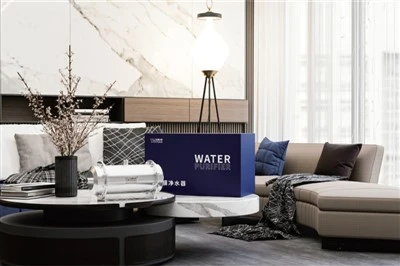
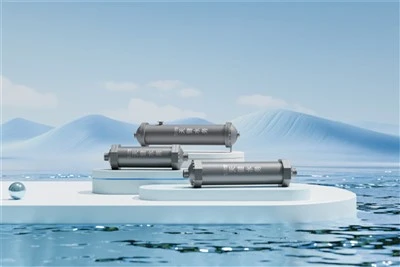
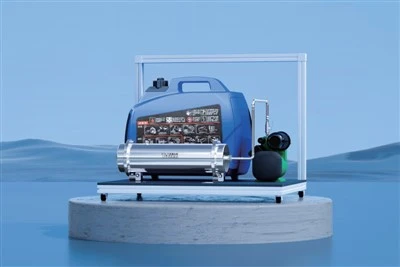
Porous ceramic membranes are primarily configured as flat sheets, tubes, or multi-channel structures. Flat-sheet membranes are mainly used for small-scale industrial production and laboratory research. Tubular membranes can be assembled into configurations resembling shell-and-tube heat exchangers to increase the effective membrane surface area; however, due to limitations in mechanical strength, they have gradually fallen out of use in industrial applications. Ceramic membranes used on an industrial scale typically feature a multi-channel configuration, where multiple channels-commonly 7, 19, or 37-are distributed across a circular cross-section. Key fabrication techniques for inorganic ceramic membranes include solid-state particle sintering (for supports and microfiltration membranes), the sol-gel process (for ultrafiltration and nanofiltration membranes), phase separation (for glass membranes), and specialized methods such as chemical vapor deposition or electroless plating (for microporous or dense membranes). The underlying theoretical framework draws from fields such as colloid and surface chemistry, materials chemistry, solid-state ionics, and materials processing.
Owing to their excellent resistance to high temperatures, solvents, acids, and bases, as well as their high mechanical strength and ease of regeneration, porous ceramic membranes are widely used in the food, biotechnology, chemical, energy, and environmental protection sectors. One research group has conducted systematic and in-depth studies on supports fabricated from aluminum oxide and specialized sintering aids at a firing temperature of 1400°C, successfully developing supports that balance permeability, mechanical strength, and corrosion resistance. Furthermore, by analyzing the relationship between raw material properties, the fabrication process, and the resulting microstructure, the group established a computational method to predict the pore structure-specifically porosity and pore size distribution-of the supports. This provides a theoretical basis for the quantitative fabrication of supports with tailored pore structures.
Filtration Membranes
China was the first to apply ceramic membrane technology to the production of antibiotics. The separation and purification of antibiotics require the filtration of fermentation broth, followed by ion-exchange resin treatment of the filtered liquid. Many antibiotic manufacturers currently use vacuum drum filters to separate and purify aminoglycoside fermentation broths. This process requires acidifying the fermentation broth to a specific pH, followed by pre-filtration using a vacuum drum filter coated with a filter aid, and subsequently performing secondary filtration via a plate-and-frame filter press, followed by resin exchange. This approach is not only cumbersome but also results in low yields of the active ingredient-with losses reaching as high as 30% during the filtration and resin exchange stages alone. In contrast, a ceramic membrane filtration system-jointly developed by "Maishengpu" (Max-Pure) and "Lukang"-has demonstrated the ability to improve yields of the active ingredient by nearly 5% during the filtration stage and by over 10% during the resin exchange stage. In developed Western nations, membrane technology is increasingly being applied across diverse sectors, including the food industry, petrochemicals, environmental protection, and biochemical pharmaceuticals. Furthermore, inorganic filtration membranes show even greater development potential than their organic counterparts. For the many antibiotic manufacturers currently facing the dual pressures of government-mandated price reductions and restrictions on the sale of antibacterial drugs, adopting innovative processes to enhance product recovery and quality is a prudent strategy for cost reduction. Specifically, upgrading existing antibiotic separation and purification processes with ceramic membrane technology could serve as a breakthrough for lowering costs and boosting profitability.
Packaging Films
In the field of food packaging, transparent ceramic-coated films-noted for their high functionality and excellent environmental compatibility-have garnered significant attention. Although these films are currently relatively expensive and their physical properties require further refinement, they are expected to occupy an important position among food packaging materials in the near future. The process for applying ceramic coatings is similar to conventional metal-coating techniques and generally follows established processing methods. These ceramic-coated films typically consist of a PET substrate (12 μm) with a ceramic (SiOx) coating. Silicon oxides can be categorized into four types: SiO, Si₃O₄, Si₂O₃, and SiO₂. In nature, however, they predominantly exist as SiO₂; consequently, their specific composition can vary significantly depending on the conditions applied during the coating process. The primary requirements for this type of film include high transparency, excellent barrier properties, superior resistance to retort processing (boiling/sterilization), good microwave permeability, environmental friendliness, and robust mechanical properties. Ceramic-coated films can generally be produced using the same conditions as those employed for aluminum-metallized films; however, it is crucial to handle the surface layer with great care during the production process to prevent any damage to the coating. Because these films are treated with silicon oxide, they exhibit excellent surface wettability, allowing for a wide range of compatible inks and adhesives-essentially, they can bond well with almost any type. Polyurethane-based adhesives are the preferred choice, while various inks can be selected based on the specific application without the need for additional surface treatment. Nevertheless, ceramic-coated films are not as easily laminated with polyethylene (PE) as aluminum-metallized films are. When a PET-based ceramic-coated film undergoes high-temperature extrusion coating or lamination with polyethylene, the PET substrate tends to stretch, which can damage the silicon oxide surface layer and compromise its barrier properties. Furthermore, technical challenges during the ceramic-coating process can sometimes cause the PET film to curl, negatively affecting its quality. Naturally, these issues are currently being addressed.
Battery Membranes
Under the "863" Program, research into solid oxide fuel cells (SOFCs) has led to the development of a new type of intermediate-temperature solid oxide ceramic-membrane fuel cell. By applying ceramic-membrane fabrication technology to SOFC production, the operating temperature range has been shifted from the conventional high-temperature range (1000–900°C) to an intermediate-temperature range (700–500°C). The Institute of Inorganic Membranes at the University of Science and Technology of China has successfully developed this new type of intermediate-temperature ceramic-membrane fuel cell, which utilizes a ceramic membrane as the electrolyte. Reducing the thickness of the cell components lowers internal resistance and increases useful power output, enabling operation at intermediate temperatures (700–500°C) rather than requiring high temperatures. This new type of fuel cell retains the advantages of high-temperature SOFCs while simultaneously reducing costs. Such ceramic-membrane fuel cells hold broad prospects for future application.
Ceramic Window Film
In August 2004, addressing the drawbacks of metallic films-such as their tendency to oxidize and their interference with radio signals-the Chinese company Shaohua Technology partnered with a renowned German industrial research institute. Together, they developed a ceramic window film incorporating "nano-honeycomb" ceramic technology. By applying Shaohua Technology's proprietary vacuum-sputtering process, they created a unique "Amber" ceramic window film, overcoming technical limitations inherent to metallic films. This film causes no interference with radio signals-including shortwave satellite signals-and is completely resistant to oxidation; the exceptional stability of the ceramic material ensures consistent thermal insulation performance over time. It is also colorfast: because the film derives its hue from the ceramic material itself rather than added pigments, it will not fade like dyed or metallic films. Highly durable, these ceramic films come with a 10-year warranty, compared to the typical 5-year warranty for metallic films. They offer a classic aesthetic-crystal-clear, reminiscent of amber, with a soft tone that provides superior visual comfort. Originally developed for use on U.S. space shuttles and the International Space Station, "Amber" nano-ceramic film has since been widely adopted in the automotive, architectural, and maritime sectors. Due to the sensitive nature of the technology, the product did not become available for sale in China until 2003.