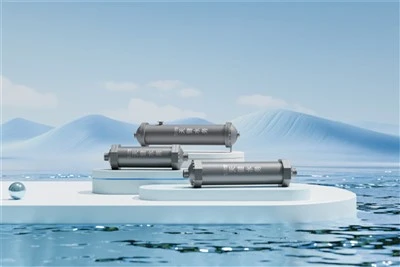

Ceramic membranes, also known as inorganic ceramic membranes, derive their name from the inorganic ceramic materials used in their construction. They are solid membranes typically composed of a support structure-made from inorganic ceramic materials such as aluminum oxide, zirconium oxide, titanium oxide, or silicon dioxide-which is then coated and fired at high temperatures. These membranes feature pore sizes ranging from 0.8 nm to 1 μm and possess an asymmetric, three-layered structure consisting of a porous support layer, an intermediate layer, and a separation layer, all designed to optimize filtration and separation performance.
Extrusion Molding: Suitable for tubular and multi-channel ceramic membranes. This process involves extruding a plasticized ceramic paste through a die to form a support structure containing channels; it is the most widely used method in industrial applications.
Tape Casting (Doctor Blade Method): Suitable for flat-sheet or thin-film ceramic membranes. A ceramic powder is mixed with solvents, dispersants, and binders to create a slurry. After vacuum degassing, the slurry is spread onto a moving carrier substrate using a doctor blade (or "knife"). Once dried, it forms a "green" (unfired) sheet, with thickness controllable to a precision of the micrometer scale.
Pressing/Slip Casting: Pressing is suitable for flat membranes or simple geometries, while slip casting is ideal for support structures with complex shapes, involving the injection of a ceramic slurry into a mold.
Rolling (Calendering): A plastic-forming technique suitable for thin ceramic sheets with a thickness of less than 1 mm. The material is gradually thinned into a sheet by adjusting the gap between rollers.